
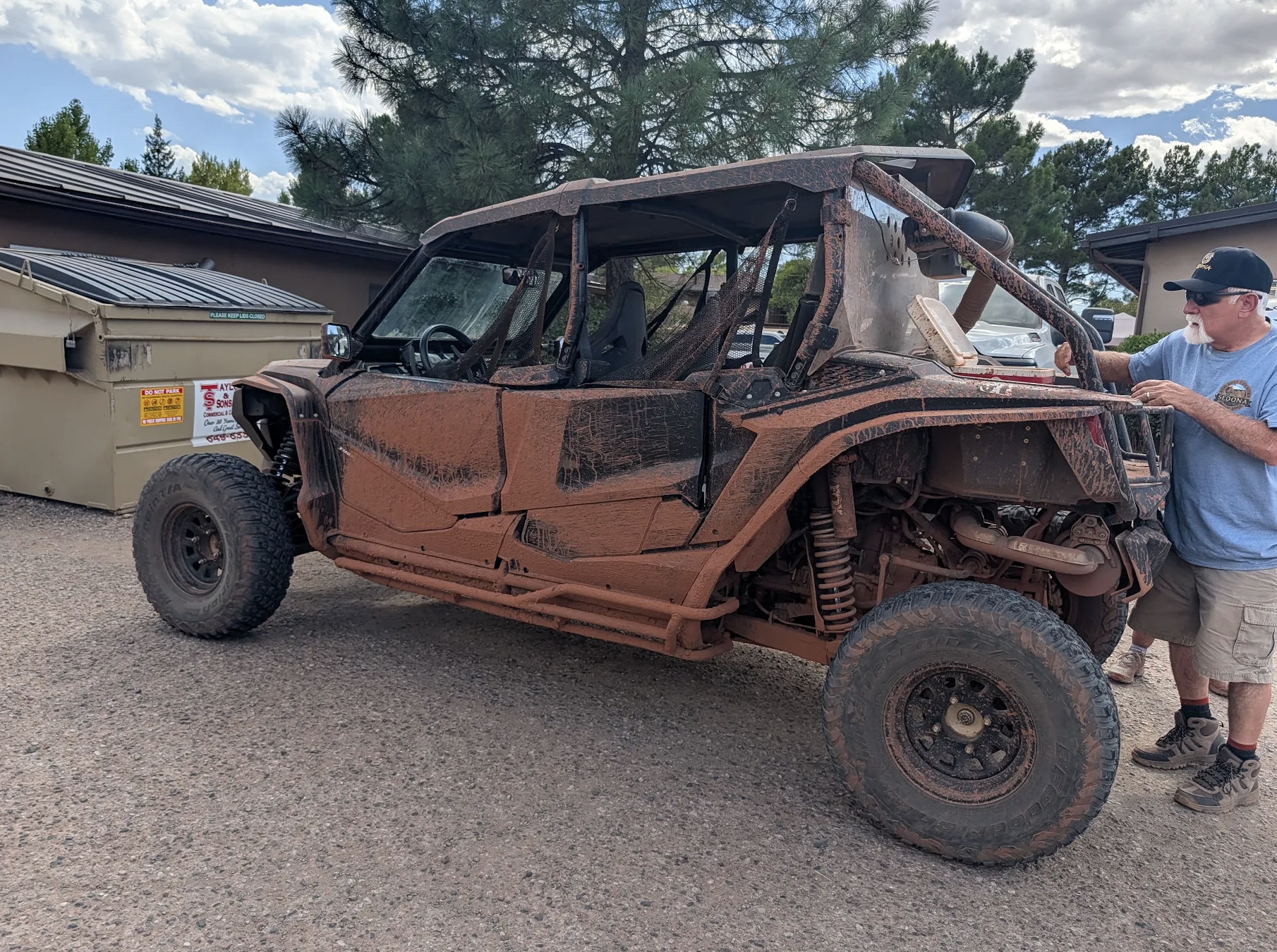
If you are renting a UTV to stay perfectly clean, you might be doing it wrong.
Sedona’s backcountry is made of red rock, loose dirt, desert dust, and the kind of rugged terrain that does not apologize for any of it. The moment your Honda Talon leaves the pavement and drops onto the trail, the landscape starts leaving its mark. On the tires. On the frame. On your clothes. Sometimes on your face.
And honestly? That is exactly the point.
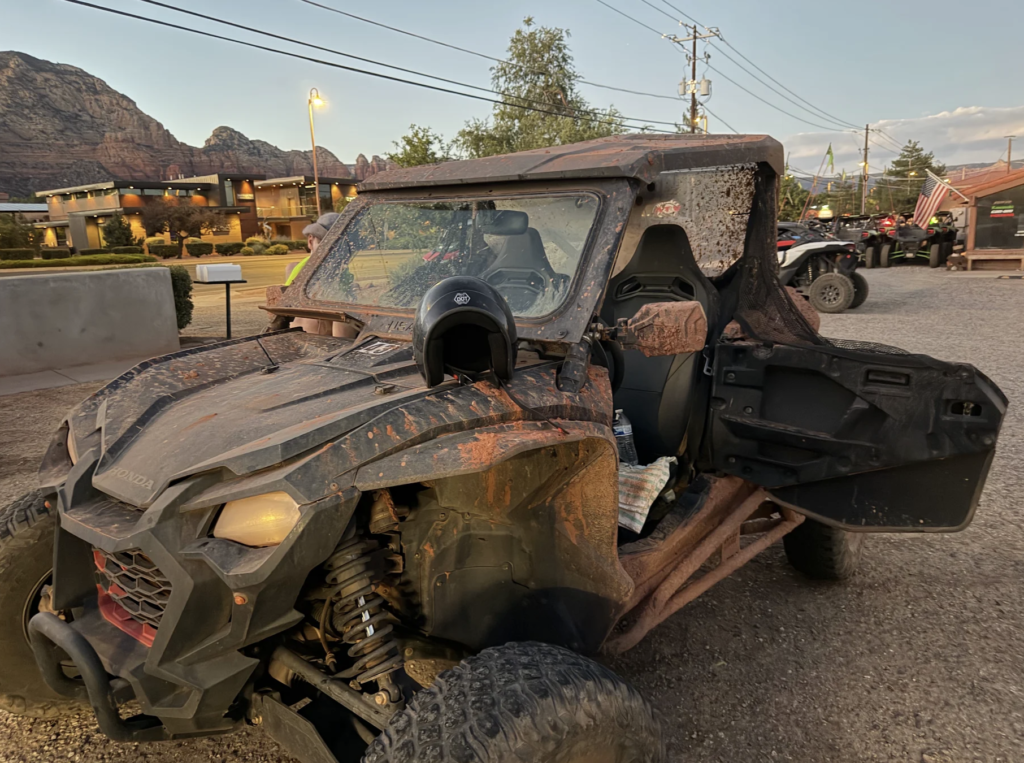
A little dust on your boots is proof you went somewhere most visitors only see from the road. The red dirt clinging to the side panels after a long day on Schnebly Hill Trail or Diamondback Gulch is not a problem. It is a souvenir.
But if you are renting a UTV for the first time, it is worth knowing what to expect. What do Sedona’s trails actually throw at you? How do conditions change? And what should you know about vehicle cleanliness before you return your rental?
Quick Answer: Sedona’s off-road trails cover dusty desert terrain, rocky washes, and rugged canyon tracks. Expect your UTV to collect red dirt and dust on nearly every ride, especially in dry conditions.
Key Takeaways
- Sedona’s trails are naturally dusty, rocky, and rugged, and that is a big part of what makes them exciting.
- Trail conditions change based on weather, season, and recent rainfall
- Different trails offer different levels of terrain challenge and dirt exposure
- Knowing what to wear and bring helps you stay comfortable on the trail
- Understanding the return expectations for your rental keeps the experience smooth
What Sedona’s Trails Are Actually Like
Sedona sits in a high desert landscape carved by millions of years of geology.
The trails here are not groomed paths through a park. They are natural routes through red rock formations, desert washes, canyon terrain, and open backcountry. The ground beneath your tires shifts from loose gravel to packed red clay to rocky scrambles depending on where you are on the trail network.
What that means for your UTV experience is variety. No two sections feel identical. And every section interacts with your vehicle in a slightly different way.
On dry trail sections, the red volcanic dust is fine and light. It kicks up behind the tires and drifts across the cab. In rocky wash sections, the terrain is more technical, and the dust gives way to rough stone that rattles the frame in a satisfying, legitimate off-road way. On steeper sections like parts of Schnebly Hill Trail, the trail surface tightens up and the views open dramatically as you climb.
All of it puts some version of Sedona’s landscape on your vehicle by the time the day is done.
How Weather Changes Trail Conditions
Trail conditions in Sedona are not static.
The same trail can feel completely different depending on recent weather, the time of year, and even the time of day. Understanding how conditions shift helps you set the right expectations before you head out.
Dry conditions: Sedona’s desert climate means most of the year is dry. Dry trails produce the most dust. Fine red sediment kicks up easily behind tires and drifts across the cab, coating everything in a faint red film. This is the most common trail condition and the most iconic version of an off-road day in Sedona.
After rainfall: Monsoon season runs roughly from mid-July through September. After a rain event, some trail sections can develop muddy patches or standing water in low areas and washes. Wet red clay has a completely different texture than dry dust. It sticks. It coats. It leaves a more saturated version of Sedona’s famous red color on everything it touches.
Winter and early spring: Cooler temperatures can leave trail surfaces firmer and more compact. Dust levels are often lower. Some higher elevation sections may encounter frost in early mornings. Overall, this is one of the cleaner seasons for riding from a dust standpoint, though the landscape is no less dramatic.
Peak fall: Fall is the most popular riding season, and dry conditions typically dominate through September, October, and into November. Expect dust levels similar to summer dry conditions, with the bonus of incredible fall light making everything look better.
Trail by Trail: What to Expect
Each of Sedona’s main off-road trails offers its own version of terrain and conditions.
Schnebly Hill Trail
Schnebly Hill Trail is one of the most iconic and demanding trails accessible by UTV rental.
The route climbs steadily from the canyon floor toward the Mogollon Rim, covering a mix of rocky track, loose red sediment, and exposed stone. The dust on the lower sections gives way to rockier, grittier terrain as you climb.
By the time you reach the upper overlooks, your vehicle has worked its way through a full range of Sedona’s surface conditions. The payoff in views is enormous. The amount of dust accumulated by the time you return is equally impressive.
Outlaw Trail
Outlaw Trail covers a mix of terrain types across its route, including open desert stretches, rocky washes, and sections that move close to the base of the formations.
The wash sections are where the most interesting conditions appear. Depending on recent rainfall, washes can range from bone dry and loose to slightly damp and compact. Either way, this trail keeps you engaged and sends you home with a vehicle that has clearly been used for its intended purpose.
Diamondback Gulch
Diamondback Gulch is famous for its terrain challenge, and it earns that reputation.
The winding route through canyon and juniper moves through varying surface types before culminating in the dramatic descent into the gulch. The gulch floor can collect more moisture than open desert sections after rainfall, and the combination of canyon walls and damp soil creates conditions that are notably different from the dry dust of the open trail.
After a day on Diamondback Gulch, your vehicle looks like it has been somewhere real. Because it has.
Vultee Arch Road
Vultee Arch Road moves through a more enclosed canyon environment than some of the open desert trails.
The narrower canyon setting can mean more shade in certain sections, which affects how surfaces dry after rain. Overall, this trail tends toward a mix of compact red dirt and light gravel. It is not the dustiest trail on the network, but it leaves its own distinctive mark.
Trail Conditions at a Glance
| Trail | Primary Surface | Dust Level (Dry) | Mud Potential (After Rain) | Terrain Challenge |
| Schnebly Hill Trail | Rocky, red sediment, loose gravel | High | Low to moderate | High |
| Outlaw Trail | Desert wash, packed red dirt | Moderate to high | Moderate in wash sections | Moderate |
| Diamondback Gulch | Canyon track, rocky descent | Moderate | Moderate to high in gulch | High |
| Vultee Arch Road | Compact red dirt, light gravel | Moderate | Low | Moderate |
| Ranch Loop | Open desert, wide trail | Low to moderate | Low | Low |
Why Getting Dirty Is Part of the Point
Here is something the best off-road riders understand from the start.
A clean UTV at the end of the day is not a sign of a great adventure. It is a sign of a cautious one.
The dust on the side panels is from that long flat stretch on Outlaw Trail where you finally opened it up. The red mud on the tires is from the wash crossing on Diamondback Gulch that made everyone in the cab hold their breath for exactly the right reason. The fine red film on the windshield is from three hours on Schnebly Hill Trail doing something that very few vehicles can do.
None of that washes off as a bad memory. It washes off as a story.
That is what Sedona’s backcountry offers that a scenic drive on the highway never can. You participate in the landscape instead of just viewing it. And landscapes that make you feel something tend to leave a mark.
What Renters Should Know About Returning Their Vehicle
Getting dirty is part of the adventure. There are still a few things to keep in mind when it comes to the vehicle itself.
Normal trail dirt and dust are expected. Sedona Off Road Center knows what their vehicles go through on these trails. Red dust, trail dirt, and general trail grime are a normal part of a day on the backcountry roads and are accounted for accordingly.
What you should avoid: The trails are for exploring, not for deliberately pushing your vehicle into conditions it was not meant for. Staying on designated trails, avoiding unnecessarily deep standing water when not appropriate, and operating the vehicle within its intended range keeps the experience fun and the equipment in good shape for the next riders.
Report anything unusual. If you notice a mechanical issue, an unusual sound, or anything that feels different during your ride, let the team know when you return. The staff is experienced with the vehicles and the trails, and straightforward communication keeps everything running smoothly.
Leave personal gear sorted. Any personal items, snacks, or belongings you brought into the vehicle should come out when you return. Beyond that, the team handles the rest.
What to Wear When You Know Dust Is Coming
Choosing the right gear for a dusty trail day makes a real difference in how comfortable your adventure feels.
- Closed-toe shoes: Required for your rental and the right call for any trail. Sandals and the backcountry do not mix well.
- Layers you do not mind getting dusty: Light, breathable clothing works well. Do not wear anything you would be upset about finding a fine red film on at the end of the day.
- Sunglasses or personal eye protection: Helmets are provided. If you want additional eye coverage on dusty sections, bring your own goggles or wraparound sunglasses. This is especially useful on dry, high dust days.
- Sunscreen: The desert sun is strong, and the open cab of a UTV gives it plenty of access. Apply before you go.
- A bandana or buff: Optional, but many riders use one to cover the lower face on particularly dusty sections. It is a classic trail move for good reason.
Dust Readiness by Trail Condition
| Condition | Dust Level | Recommended Gear Add-On |
| Dry summer or fall day | High | Personal eye protection, buff or bandana |
| Dry spring day | Moderate to high | Sunglasses, light layer |
| Day after light rain | Low to moderate | Closed-toe shoes with grip, older clothes |
| Day after heavy rain | Low dust, possible mud | Older clothes, grip footwear, check trail status |
| Winter dry day | Low to moderate | Layers, sunglasses |
Red Dust Is the Badge of a Real Adventure
Sedona’s trails are not designed to be polished experiences.
They are real backcountry routes through one of the most dramatic desert landscapes in the American Southwest. The rocks are real. The dust is real. The mud after a monsoon storm is absolutely real.
And when you climb back into the vehicle at the end of the day, look over at whoever rode with you, and notice that you both have a fine layer of red somewhere on your clothes, that is not a problem worth solving. That is a day worth remembering.
Rent a Honda Talon from Sedona Off Road Center and go find out exactly what Sedona’s trails are made of.
Call (928) 284-4735 or book your rental online today.
Frequently Asked Questions
Q: How dirty does a UTV get on Sedona’s trails?
A: On a dry day, expect a coating of fine red dust on the vehicle, your clothes, and any gear in the cab. After rainfall, trail sections can produce mud, especially in wash areas and canyon floors.
Q: Is it normal for a UTV rental to come back dirty?
A: Yes. Trail dust, red dirt, and general trail grime are a normal part of a day on Sedona’s backcountry roads. Sedona Off Road Center’s team is very familiar with what the trails do to their vehicles.
Q: Which Sedona trail is the dustiest?
A: Schnebly Hill Trail tends to produce the most dust on dry days due to its length, elevation, and varied red sediment surfaces. Outlaw Trail is also notably dusty on open desert sections.
Q: What should I wear to stay comfortable on a dusty trail day?
A: Wear breathable clothing you do not mind getting dusty, closed-toe shoes, and sunglasses. Bring personal eye protection if you want extra coverage, and consider a bandana for particularly dry days. Helmets are provided.
Q: Do I need to clean the UTV before returning it?
A: Normal trail dirt and dust are expected and accounted for. Remove your personal belongings and report any mechanical concerns to the team. The staff handles standard post-ride cleaning.
Q: Can Sedona trails get muddy?
A: Yes. During and after monsoon season, which typically runs mid-July through September, some trail sections can develop muddy patches, particularly in washes and lower canyon areas.
Q: What vehicle does Sedona Off Road Center offer?
A: Sedona Off Road Center rents Honda Talon side-by-side vehicles for self-guided adventures on Sedona’s off-road trail network.
https://maps.app.goo.gl/DhuPzXtzPu3jRvS5A
Created on 09-07-26